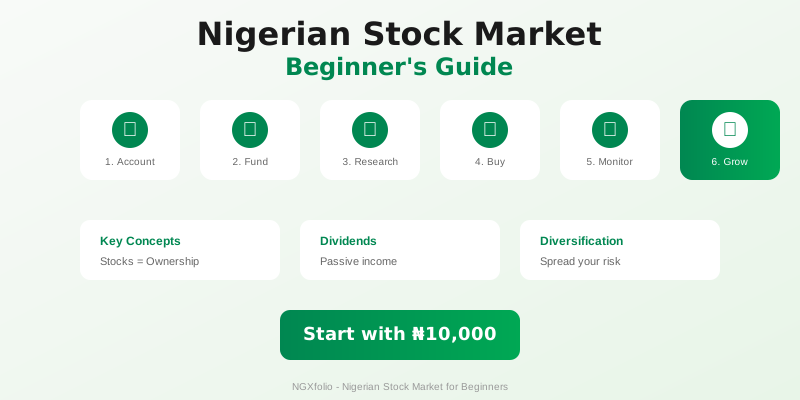
The Nigerian stock market gives everyday investors a way to buy shares in companies like GTCO, MTNN, Zenith Bank, and Dangote Cement. If you want to start investing on the NGX but do not know which broker to choose, how much to begin with, or what fees to expect, this guide is for you.
This beginner walkthrough covers the practical first steps: opening a brokerage account, funding it, researching your first stock, placing an order, and building a simple starter portfolio you can actually manage.
What you will learn in this guide
- How the NGX works for first-time investors
- How to choose and open a Nigerian brokerage account
- What fees, taxes, and dividend rules to expect
- How to build a simple starter portfolio without overcomplicating it
Short answer: to invest in Nigerian stocks, you need a licensed broker, a funded account, and a shortlist of companies you understand. If you already know you need a broker first, jump to how to open a brokerage account in Nigeria. If you want to understand the numbers you will see on market pages, read how to read NGX market data.
In this article
What is the Nigerian Stock Market?
The Nigerian stock market, officially known as the Nigerian Exchange (NGX), is a securities exchange where stocks of public companies are bought and sold. It was established in 1960 and has since grown to become one of Africa's largest stock markets.
Key Facts About NGX
- Location: Lagos, Nigeria
- Founded: 1960
- Market Cap: Over ₦100 trillion
- Listed Companies: 150+
- Daily Trading: Billions of naira
💡 Why Invest in Stocks?
Historically, stocks have outperformed other investments like bonds and savings accounts over the long term. The NGX has provided significant returns to patient investors who held quality stocks through market cycles.
How the Stock Market Works
What is a Stock?
A stock (also called a share or equity) represents ownership in a company. When you buy a stock, you become a partial owner of that business and share in its profits (through dividends) and losses.
How Prices are Determined
Stock prices change based on supply and demand:
- More buyers than sellers: Price goes up 📈
- More sellers than buyers: Price goes down 📉
- Factors affecting demand: Company performance, news, economic conditions, investor sentiment
Trading Hours
The NGX operates:
- Monday to Friday: 9:00 AM - 4:00 PM (WAT)
Getting Started: Step by Step
📝 Step 1: Open a Brokerage Account
You need a licensed stockbroker to buy and sell stocks. Choose a Primary Dealing Member (PDM) registered with the SEC. Popular options include:
- Stanbic IBTC Securities
- FBNQuest Securities
- CardinalStone Partners
- APT Securities
- United Capital Securities
💰 Step 2: Fund Your Account
Transfer money from your bank account to your brokerage account. Most brokers accept transfers via:
- Bank transfer
- USSD
- Online banking
- Mobile money
Minimum investment: Varies by broker, typically ₦5,000-₦10,000
🔍 Step 3: Research Stocks
Before buying, research companies using:
- Company financial statements
- NGX website (ngxgroup.com)
- Broker research reports
- News sources (Nairametrics, BusinessDay)
- NGX Pulse for portfolio tracking!
📊 Step 4: Place Your Order
Through your broker's platform (online or mobile):
- Enter the stock symbol (e.g., GTCO for Guaranty Trust)
- Specify number of shares
- Choose order type (market order for immediate purchase)
- Confirm and submit
💼 Step 5: Monitor Your Portfolio
Track your investments using NGX Pulse or your broker's platform. Review regularly but avoid overreacting to daily price movements.
Types of Orders
Market Order
Buy or sell immediately at the best available price. Good for beginners and regular investments.
Limit Order
Set a specific price at which to buy or sell. Gives you more control but may not execute if price isn't reached.
Stop Loss Order
Automatically sell if price falls to a certain level. Helps limit losses but requires monitoring.
Key Terms Every Beginner Should Know
- Dividend: Portion of company profits paid to shareholders
- Capital Gain: Profit from selling a stock at a higher price than bought
- P/E Ratio: Price relative to earnings (valuation metric)
- Market Cap: Total value of a company's shares
- Volume: Number of shares traded in a day
- Portfolio: Collection of all your investments
- Diversification: Spreading investments across different stocks
- Yield: Annual dividend as percentage of stock price
Building Your First Portfolio
Principles for Beginners
🎯 Investment Strategy Tips
- Start small: Begin with what you can afford to lose
- Think long-term: Stocks are for holding years, not days
- Diversify: Don't put all money in one stock
- Invest regularly: Monthly contributions add up over time
- Reinvest dividends: Buy more shares automatically
Sample Starter Portfolio (₦100,000)
- GTCO (Guaranty Trust): ₦20,000 - Banking leader
- ZENITHBANK: ₦20,000 - Diversified banking
- MTNN (MTN): ₦15,000 - Telecom growth
- DANGOTE: ₦15,000 - Industrial/cement
- NESTLE: ₦15,000 - Consumer goods
- UCAP (United Capital): ₦15,000 - Financial services
Common Mistakes to Avoid
- Timing the market: Trying to buy at the bottom and sell at the top rarely works
- Emotional trading: Fear and greed are your enemies
- Putting all eggs in one basket: Diversification reduces risk
- Ignoring fees: Brokerage fees eat into returns
- Chasing hot tips: Do your own research
- Panic selling: Markets recover over time
Taxes and Fees
Fees to Expect
- Brokerage commission: Typically 0.5-1% of trade value
- SEC fee: 0.3% (usually included)
- CSL fee: 0.2% (usually included)
- Stamp duty: 0.75% on purchase
Tax on Dividends
Dividends are subject to 10% withholding tax, which the company deducts before paying.
Capital Gains Tax
10% on profits when you sell shares (for non-exempt investors).
Using Technology
Modern tools make investing easier:
- NGX Pulse: Track your portfolio, monitor dividends, set price alerts
- Broker apps: Buy/sell stocks from your phone
- Market data: Live prices and news
- Research: Access company reports online
Quick Checklist: Before You Start
📋 Pre-Investment Checklist
Next Steps
You're now equipped with the knowledge to start your investment journey. Remember:
- Start with education - you did that by reading this!
- Open a brokerage account
- Start with a small amount you can afford
- Think long-term and stay disciplined
- Use tools like NGX Pulse to track your progress
The best time to start investing was yesterday. The second best time is today!
Ready to begin? Start tracking your portfolio with NGX Pulse →